Evidence-based conversational AI tools that support health promotion, behavior change, and clinical care—empowering people and helping professionals.
BeHealthyAI does not provide medical care or emergency services. In an emergency, call 911 or your local emergency number.
BeHealthyAI is a home for safe, research-informed conversational AI tools that help people understand their health, build healthier habits, and prepare for clinical care.
Answer everyday health questions in clear, accessible language anyone can understand.
Support behavior change through structured, validated behavioral frameworks and clinical content.
Extend the reach of clinics and public health programs beyond office hours and geography.
Our tools complement—never replace—licensed healthcare professionals and clinical judgment.
Health questions don't keep office hours. People need support at night, on weekends, and during life decisions.
With proper training, conversational AI can deliver structured, empathetic, evidence-based guidance that truly helps.
AI can handle repetitive education and coaching tasks, giving clinicians more time for complex care.
AI can help people who face long wait times, stigma, or limited resources access reliable health information.
When developed responsibly, conversational AI helps the right person get the right information at the right time.
Each BeHealthyAI tool follows the same simple, effective process:
Users share a question or goal — "I'm feeling down," "Should I consider HIV prevention?", or "How can I improve sleep?"
The AI interprets the concern using curated clinical content, guidelines, and behavior-change frameworks.
The AI provides tailored information, coaching, and next steps, and prompts users to seek clinical care when appropriate.
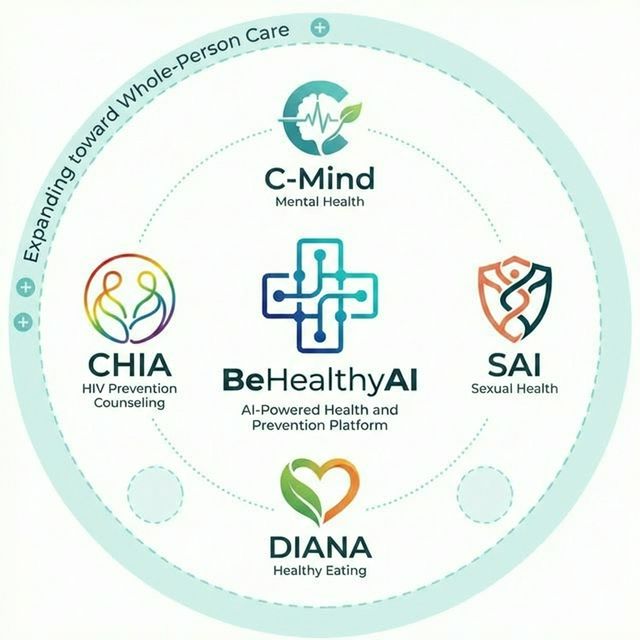
BeHealthyAI.org will host a family of AI tools focused on prevention, mental health, and chronic disease self-management.
A conversational support companion grounded in CBT and motivational interviewing. Helps users track mood, challenge unhelpful thoughts, build coping skills, and prepare for clinical visits.
Visit c-mindcare.com
A stigma-free digital companion providing clear, evidence-based guidance on HIV prevention, PrEP, testing, vaccination, and readiness for action.
Try CHIA
Your knowledgeable guide for bacterial STI prevention, screening, treatment navigation, and sexual wellness—supportive, private, and judgment-free.
Join waitlist
Supports realistic goal-setting around nutrition, physical activity, sleep, and daily habits with small, actionable steps for cardiovascular health.
Join waitlistWe believe health AI must earn trust. Every BeHealthyAI tool is built around three commitments:
Grounded in clinical guidelines, peer-reviewed research, and input from clinicians and public health experts.
We do not sell user data. When data is used for improvement, we rely on de-identified or aggregated information and follow HIPAA-aligned data protection principles.
Designed to flag high-risk or emergency situations and encourage users to seek human care. Tools do not diagnose, prescribe, or provide emergency services.
Built on clinical guidelines, manuals, validated questionnaires, and expert-reviewed scripts—not unverified internet content.
Tools use CBT, motivational interviewing, and other validated approaches to support meaningful behavior change.
We regularly review interactions, correct issues, update content, and integrate new evidence and safety monitoring.
We're actively building and testing our first BeHealthyAI tools with individuals, clinics, and research partners. Join the waitlist or explore collaboration opportunities below.
No. BeHealthyAI tools provide information and coaching but do not replace professional medical care. Always consult with a licensed healthcare professional for diagnosis and treatment.
We do not sell user data. Any analysis uses de-identified or aggregated information whenever possible, following HIPAA-aligned data protection principles.
Some tools may be available at no cost during early testing phases. Additional tools may be offered through partnerships with health systems or public health programs.
Yes. We welcome collaborations with clinics, health systems, researchers, and public health teams. Contact us to learn more.
Through research grants, partnerships, and evaluation studies, including NIH-funded research programs.
Content is reviewed by clinicians and behavioral experts to ensure supportive, nonjudgmental, and safe guidance. Tools include safety protocols for crisis detection and referral to human care.